Scripture
Ephesians 6:10–18
Read alongside: Isaiah 59:17. The New Testament armor has an Old Testament root: God Himself is described wearing righteousness as a breastplate and salvation as a helmet, centuries before Ephesians 6 was written.
Cover Art
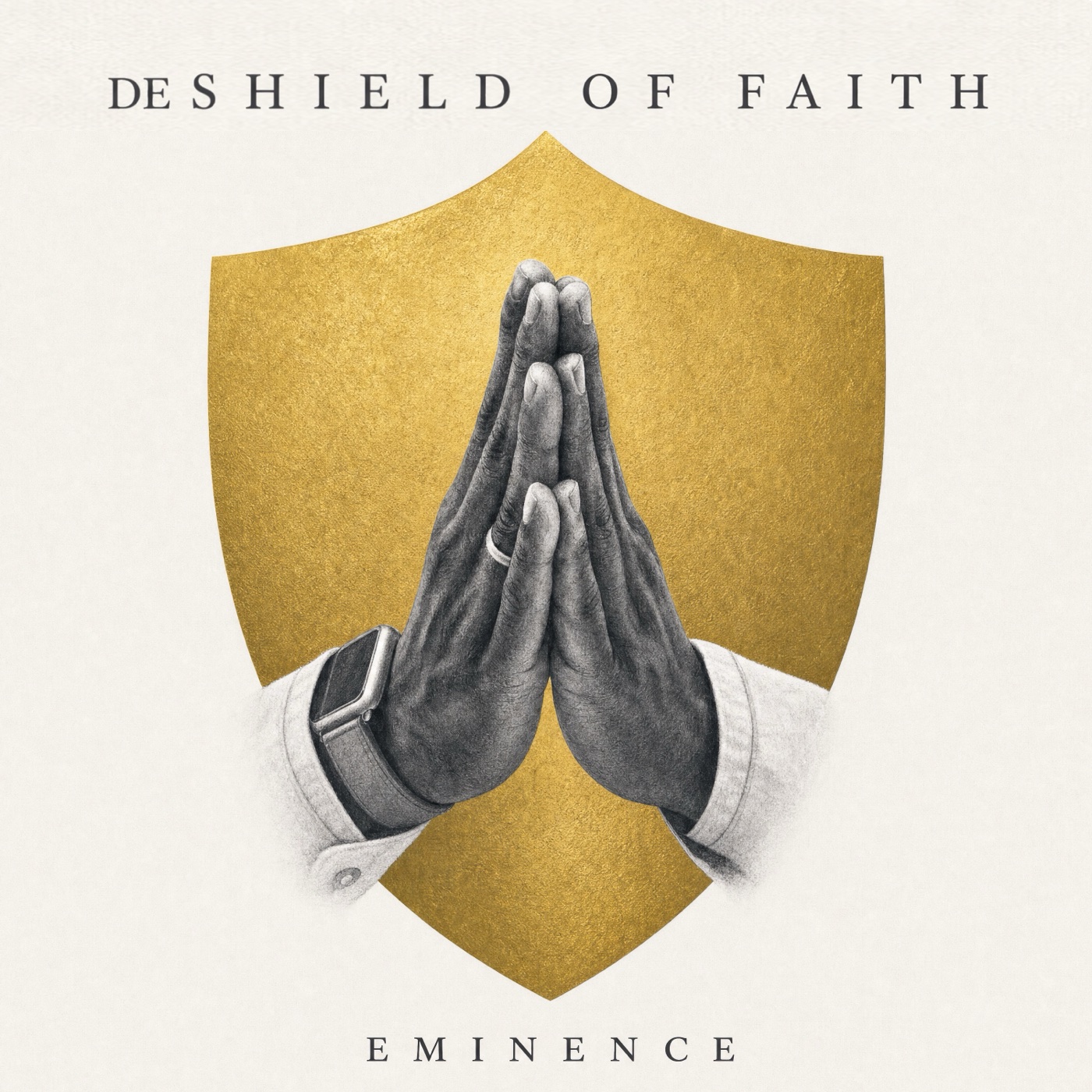
Two hands clasped in prayer, set inside a shield outline. The album’s central idea made literal: a surname fused with the shield of faith (Ephesians 6:16), rendered as a coat of arms. Before a single track plays, the cover answers the question of who this armor belongs to.
What would your own coat of arms look like? What symbols would tell the truth about who you are and whose you are?
Listen
Play the title track straight through. Notice where the armor language lands: this is the fitting room. Everything the next eight weeks unpack gets put on here first.
Discuss
- Ephesians 6 says to put on the full armor of God, not just the pieces we like. Which piece do you reach for most, and which one do you tend to leave in the closet?
- The bar admits a missed loop in the same breath as claiming truth. Why is it hard to admit failure and hold onto identity at the same time?
- A belt holds everything together and keeps things from falling apart. What does truth actually hold together in your daily life, in practical terms?
- Isaiah 59 shows God Himself wearing this armor first. What changes when you realize the armor was His before it was ever yours?
- This track also reaches for Gombey, Bermuda’s masked drum-and-dance tradition, as the language for the enemy’s defeat. What cultural inheritance do you carry that could become theological vocabulary instead of just background?
Live It
Write down one loop you missed this week, a real one, and next to it write the specific truth that covers it. Keep it somewhere you will see it every morning.
Pray
For an identity fastened by truth instead of performance, and for the honesty to admit missed loops without shame.